










AWABB'S LAW COMPLIANCE
Managing Damp & Mould Within Tight Deadlines
Damp and mould cases now sit inside a strict legal timeline. Awaab’s Law sets out exactly how fast you must investigate, report and act once a hazard is identified, and the margin for delay is small.
This creates pressure on teams who are still working from spreadsheets, separate inboxes and paper-based site notes. When records sit in different places, it gets hard to prove what happened and when. Gaps like this carry real risk: missed deadlines, weak evidence and residents or occupants left without answers.
Staying compliant means knowing the status of every case at all times, with evidence that holds up if it's ever checked.

EMERGENCY HAZARD
Investigate and make safe within 24 hours.

POTENTIAL SIGNIFICANT HAZARD
Complete investigation within 10 working days.

WRITTEN SUMMARY
Written findings must be shared within 3 working days of the investigation concluding.

MAKE PROPERTY SAFE
Complete relevant safety works within 5 working days of the investigation concluding.

BEGIN FURTHER WORKS
Complete relevant safety works within 5 working days of the investigation concluding, or within 12 weeks where this is not possible.
OUR SOLUTION
A Better Way to Manage Damp & Mould
We manage each damp and mould case as a single, traceable process. A survey identifies the cause, remediation addresses it, and our digital system records every step in between. Nothing falls through the gaps, and you always know what stage a case has reached.
This matters most in the environments we work in. Defence sites, healthcare facilities and other operational buildings often have access restrictions, security requirements or occupants who can’t simply be moved out. We plan around these constraints rather than treating every site the same way.
- Clear evidence for every case, ready if questions are raised
- Root-cause repairs, not short-term treatment
- Full case visibility, from first report to completion
- Delivery that works within secure or sensitive environments


Getting damp and mould right starts with finding the actual cause. Our CSRT-accredited surveyors investigate before any work is specified, so repairs target the source of the problem rather than its symptoms.
OUR EXPERTISE
A Full Service, Built on Accurate Diagnosis
Digital Workflow & Audit Trail

Every case is logged and tracked through our digital system, with timestamps, photos, moisture readings and resident or occupant updates recorded as they happen. This builds an evidence trail you can refer back to at any point.
CSRT-Accredited Diagnosis

Our surveyors hold CSRT accreditation and follow a structured investigation process to identify the true cause of damp or mould, whether that’s condensation, penetration, rising damp or a building defect.
Root-Cause Hard Fabric Remediation

We fix what’s causing the problem. That might mean fabric repairs, ventilation upgrades or moisture control work, depending on what the survey finds.
Emergency Response Capability

Where a case presents an immediate risk, we can mobilise quickly to assess and act, while keeping full documentation running alongside the response.
Permanent Hard-Fabric Remediation
Diagnosis & Evidence
- CSRT Surveys: Establish the cause, whether condensation, rising damp, penetration or a building defect.
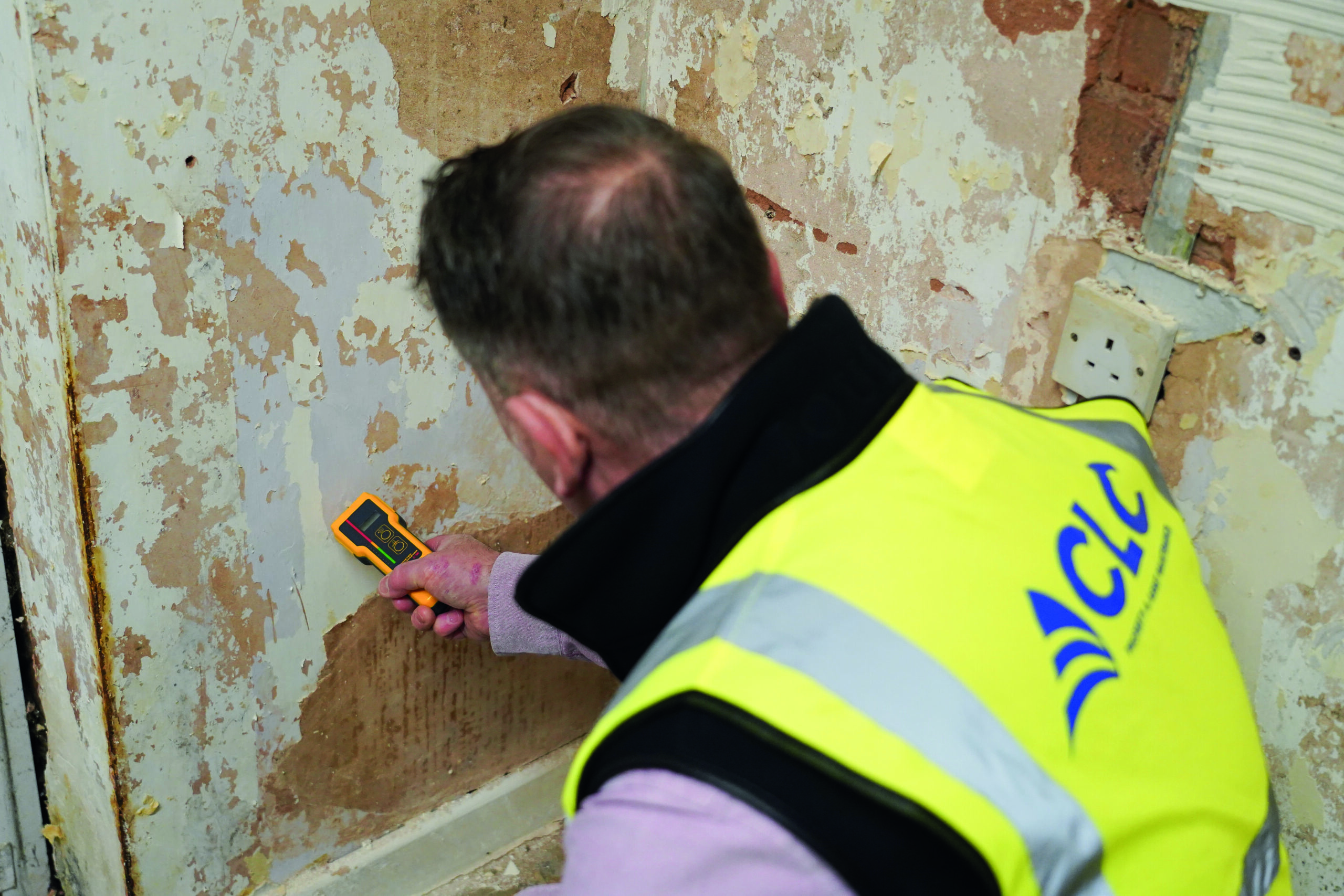
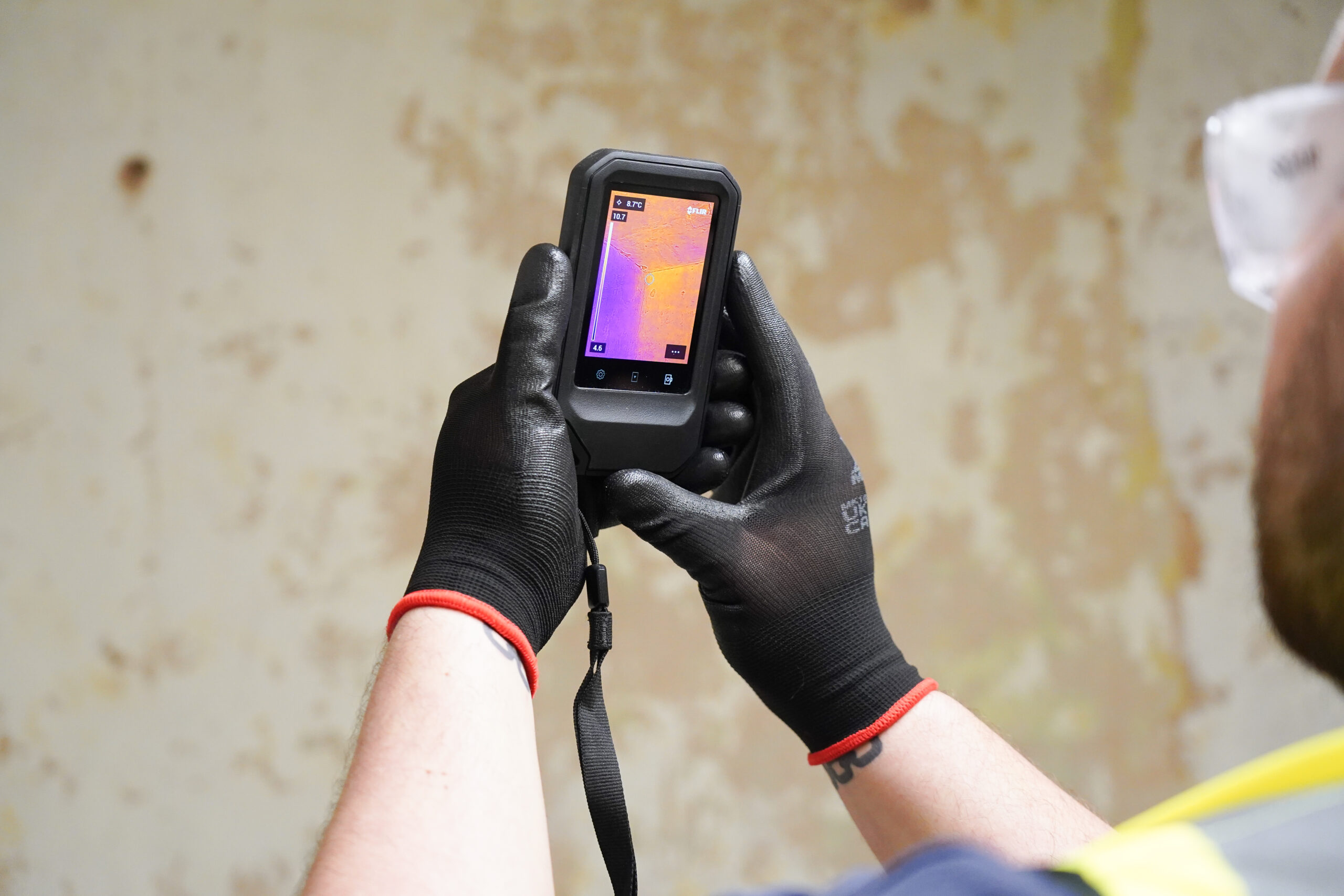
- Moisture Readings: Measure moisture levels in walls, floors and ceilings to confirm the source.
- Ventilation Checks: Assess whether existing ventilation is adequate and working correctly.
- Fabric Checks: Inspect roofs, masonry, drainage and openings for signs of water ingress.
Building Fabric Intervention
- Roof & Envelope Repairs: Fix roofing, masonry, render and rainwater goods to stop water getting in.
- Damp-Proofing: Install or renew damp-proof courses to control rising moisture.
- Doors, Windows & Junctions: Repair seals and junctions that let in moisture or cold air.
- Drainage & Ground Levels: Correct drainage and ground levels around the building to stop water pooling.

Moisture & Airflow Control
- Positive Input Ventilation: Brings in fresh air to reduce humidity throughout the property.
- Mechanical Extraction: Fits continuous extraction in kitchens and bathrooms to manage moisture at source.
- Extract Fan Upgrades: Installs humidity or timer-controlled fans in rooms that need them most.
- System Servicing: Cleans and checks existing ventilation to keep it working as intended.

Fabric Repair & Reinstatement
- Mould Treatment: Removes mould and treats surfaces to stop it coming back.
- Plaster, Timber & Floor Repairs: Replaces damaged materials affected by damp.
- Insulation Upgrades: Adds insulation where cold spots are contributing to condensation.
- Decoration & Finishing: Reinstates surfaces with breathable materials once everything has dried out.

Verification & Prevention
- Final Verification: Checks and moisture readings to confirm the issue is resolved before sign-off.
- Guidance for Occupants: Plain advice on using heating and ventilation to prevent recurrence.
- Work Guarantees: Written guarantees covering remedial works and any systems installed.



Trusted by Social Housing Providers











Talk to Us About Awaab’s Law Compliance
We help you manage damp and mould cases on time, with evidence you can stand behind and repairs that last. Get in touch to discuss your portfolio.

Accreditations
Selected accreditations held across the Axis CLC Group.

























Damp & Mould FAQs
What is Awaab’s Law?
Awaab’s Law is part of the Social Housing (Regulation) Act 2023. It sets fixed timescales for investigating and resolving hazards such as damp and mould. It’s named after Awaab Ishak, a two-year-old who died after prolonged exposure to mould in his family’s home.
What are the key deadlines?
Landlords must investigate a significant damp or mould hazard within 10 working days of being made aware of it, and provide a written summary within 3 working days of that investigation. If the hazard is confirmed as significant, safety works must start within 5 working days. Emergency hazards, including severe damp and mould, must be addressed within 24 hours.
Does Awaab’s Law apply outside social housing?
At present, the law applies to registered social housing providers in England. The Government has signalled an intention to extend similar duties to the private rented sector through the Renters’ Rights Bill, though the detail and timing are still being worked out. Estate owners and managers in other sectors shouldn’t assume they’ll stay outside its scope, and it’s worth planning ahead of any extension.
What types of damp are there?
There are three main types. Rising damp is moisture moving up through a wall from the ground. Penetrating damp is water getting in from outside, often through a roof leak, damaged render or faulty guttering, and it can appear at any height on a wall. Condensation damp comes from excess humidity inside a property combined with poor ventilation, showing up as moisture and mould on cold surfaces. Each has a different cause and needs a different fix, which is why correct diagnosis matters before any work starts.
What is rising damp, and why does it show up more in older buildings?
Rising damp happens when ground moisture travels up through masonry by capillary action. It usually shows up low on a wall, where the damp-proof course has failed, been bridged or was never installed. Signs include tide marks or staining up to around a metre high, salt deposits on plaster, peeling paint or wallpaper, and occasionally rot where timber meets a damp wall. It’s more common in older buildings because many either lack a proper damp-proof course or have one that’s worn out over time.
What causes damp and mould in a property?
Common causes include:
- Defects in the building itself, such as a failed damp-proof course, cracked walls, a leaking roof or damaged render
- Poor ventilation and high indoor humidity, leading to condensation and mould growth
- Water getting in through raised ground levels, blocked drainage or failed waterproofing
- Maintenance issues left unresolved over time
- Materials that trap moisture instead of letting it escape, such as the wrong type of paint or render
What does Concept’s damp and mould service cover?
We cover the full process: survey and diagnosis, mould treatment, plaster and timber repairs, damp-proofing, ventilation upgrades and waterproofing. We focus on fixing the root cause rather than treating the symptoms, so the problem doesn’t come back. This also supports estate owners and managers in meeting their obligations under Awaab’s Law.
How does Concept track and report on damp and mould cases?
We log each case digitally from the first report onward, including site photos, moisture readings and updates at every stage. This gives you a clear record of what was found, what was done and when, which makes it straightforward to evidence compliance if you’re ever asked to.
